Prediction Markets Displace Bookmakers in the U.S. — Trust Securities Study

Lina Almans
23 March 2026
Comment 0
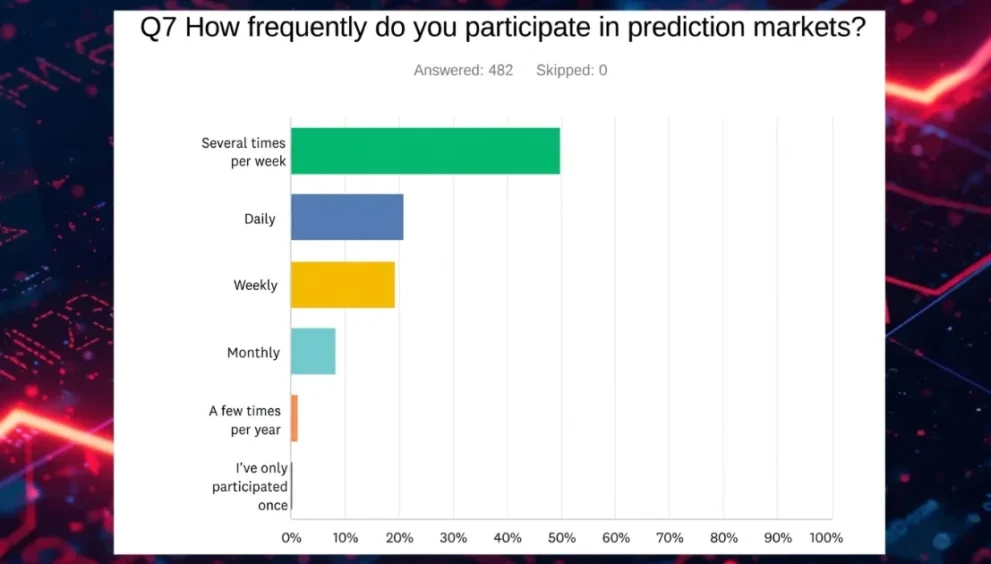
Nearly 50% of users trade on prediction markets several times a week
Prediction platforms remain highly popular among U.S. users and are increasingly emerging as an alternative to traditional bookmakers, according to a study by Trust Securities.
Nearly 50% of prediction market users place trades several times a week or more. Interest is highest in sports events (75.5%), followed by economic (52.9%) and political (46.9%) forecasts. In sports, the NFL and NBA dominate, with more than 80% of respondents placing bets on these leagues.
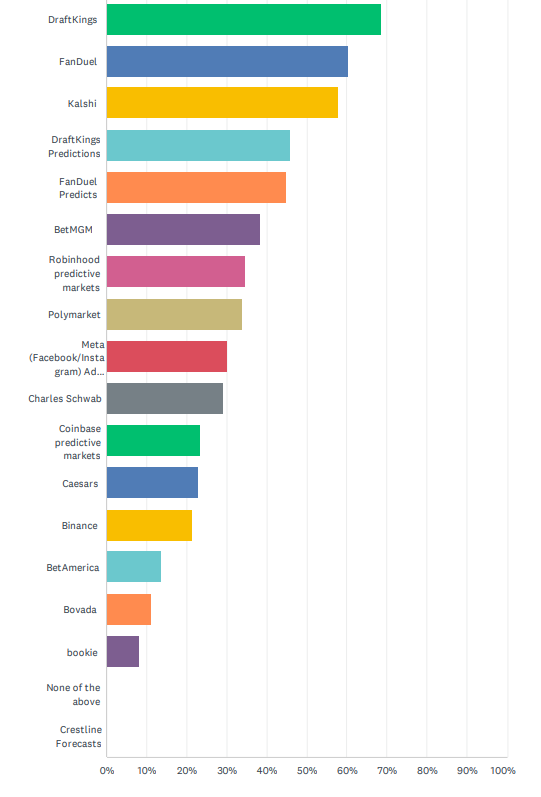
The study also assessed platform popularity, including services from adjacent segments. The sample covered both dedicated prediction platforms and sportsbook brands offering similar products. DraftKings was the most widely used (68.5%), followed by FanDuel (60.4%) and Kalshi (57.9%), while Polymarket was chosen by 33.8% of respondents.
The figures reflect the share of users who engaged with these platforms over the past six months, with multiple selections allowed.
Most respondents (84.8%) had prior betting experience before the rise of prediction markets, and 64.7% currently use both prediction platforms and traditional bookmakers.
Around 62% of users spend the same or more on prediction markets than with bookmakers.
The most common stake size is between $51 and $250 (50.6%), while another 40.6% wager up to $100.
About 69.7% of respondents reported making a profit using prediction markets, and 58.3% said they win more often there than with bookmakers.
Among the main reasons for choosing prediction platforms, users most frequently cited their greater reliance on skill (53.4%) and a wider range of events (47.2%).
At the same time, more than 60% of respondents consider the risk of insider information being used by other participants, and over 70% said they had refrained from trades at least once for this reason.
Earlier, Gambling Park reported that Kalshi and Polymarket users matched professional analysts in forecast accuracy, a study found.
The survey was conducted in March 2026 among 482 respondents in the United States, primarily users aged 30–49 with higher or above-average income levels.


Best Bonuses

BitStarz Bonus Code – Welcome Bonus
Активен до: 22.12.2026
BitStarz offers a welcome bonus: up to $500 or 5 BTC, plus extra rewards after your first deposit.

Best Linebet Promo Code for New Users: 2 Welcome Bonuses
Активен до: 22.12.2026
Up to 1766 USD + 150 free spins for casino or a 100% sports bonus up to 117.89 USD on the first deposit.

Working 888starz.bet Promo Code – Sports & Casino Bonus
Активен до: 22.12.2027
Promo code unlocks the full welcome package, including up to €1500 + 150 Free Spins in the casino and up to €400 in sport.

Working Pinco Promo Code 2026 – Elite Welcome Rewards
Активен до: 22.12.2026
New players at Pinco can claim a 160% casino bonus on their first deposit by registering with the promo code GPARK.

Official Fonbet Promo Code 2026 for €3,000
Активен до: 22.12.2026
Choose a multi-stage casino bonus and get up to €3,000 and 225 free spins across your first five deposits.

Bonus Promo code PIN-UP — Special Promo
Активен до: 22.12.2026
Profitable bonus with using our promo code up to €5,000


