What Does a Fly Have to Do With It? How a Digital Brain Ended Up in Casinos and Crypto

Lina Almans
22 September 2026
Comment 0
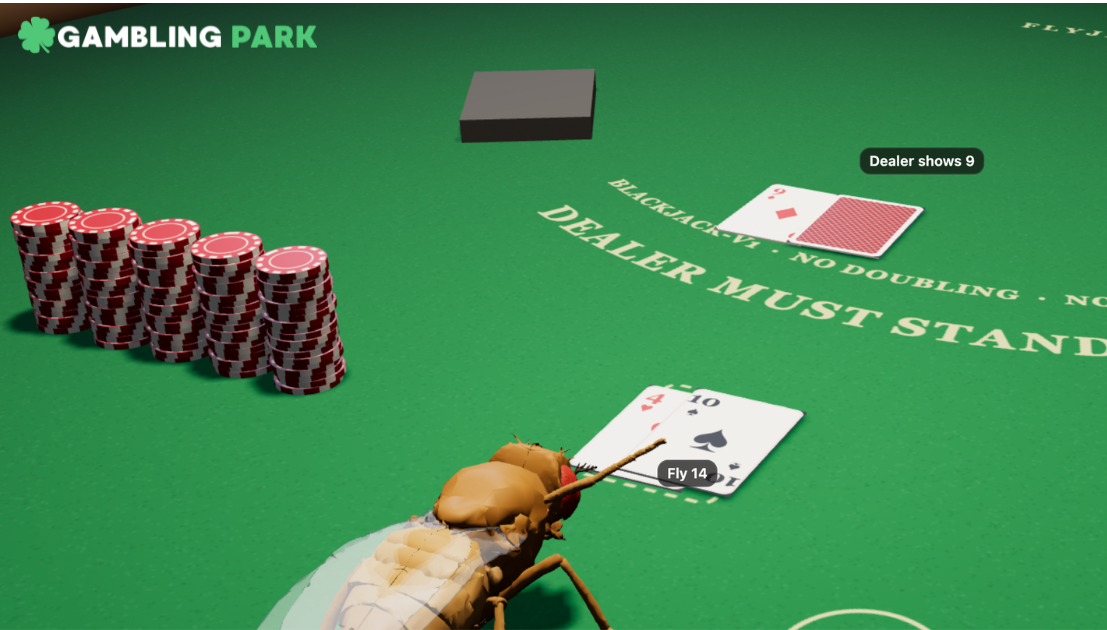
Screenshot from The Fly’s Table blackjack demo, where users can play against the digital fly model
On June 8, 2026, researchers from Google Research, HHMI Janelia, the University of Cambridge, and MRC LMB released MaleCNS v1.0 — a complete map of the central nervous system of an adult male fruit fly.
This is not an AI model trained on data, but a digital reconstruction of the fruit fly’s nervous system architecture: it recreates the connections between more than 166,000 neurons and around 125 million synaptic contacts.
This allows scientists and developers to create models of the fly’s nervous system and connect them to games, software, and other virtual environments.
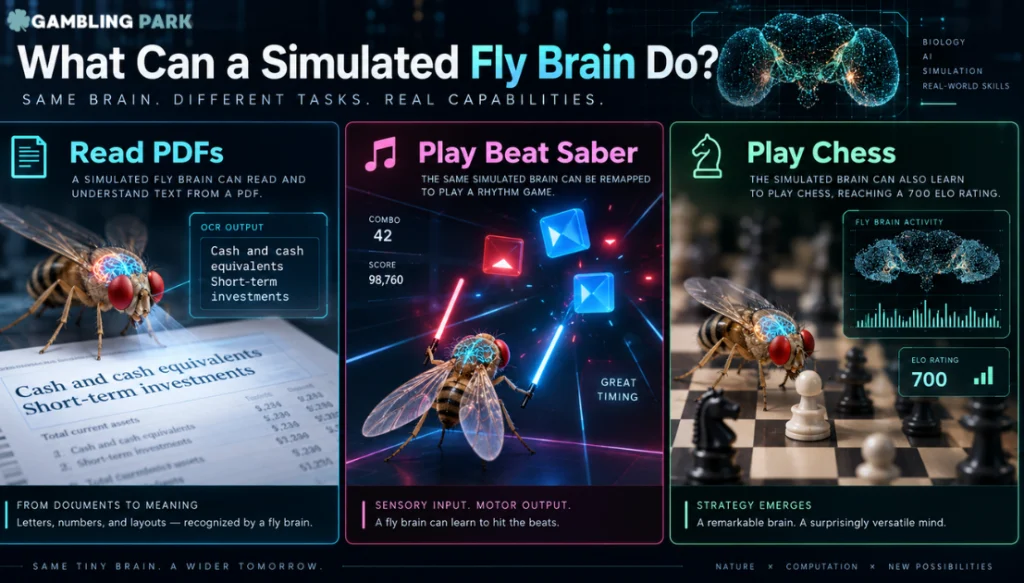
Similar experiments began appearing one after another. The computer model of the fly’s nervous system has already been connected to Minecraft, Doom, Beat Saber, Super Mario 64, and chess. In the chess project, the creator claims that the virtual fruit fly plays at around 700 Elo — a rating level comparable to that of a beginner amateur player.
The idea was quickly picked up by the crypto industry as well. One example is the Stonkfly project by Coinbase engineer Alex Wormuth. The model was given a virtual $100 to trade Bitcoin: it received price movement data through its visual system, while neural activity determined whether to buy, sell, or wait. Profits triggered signals through 15 dopamine neurons, while losses were communicated through two neurons associated with negative reinforcement. On its first day, the model earned around $1, but Wormuth himself acknowledges that stable learning and consistent profits have not yet been achieved. The project’s code is open source.
In September, the experiments reached the gambling industry as well.
In the project The Fly’s Table, a model of part of the fly’s nervous system played 30,000 hands of blackjack.
According to the project’s creator, the model improved its results: at first, it lost an average of 45 chips for every 100 chips wagered, but later this figure dropped to 16. However, it never learned to win and only became significantly better at losing less. In 52% of cases, its decisions matched the basic strategy. When the dopamine signal was disabled, the improvement disappeared. According to the author, the progress was caused by reinforcement rather than chance. The model failed to master poker.
A separate blackjack demo is available on fanpu.io, where users can play against the “fly”: it decides on its own whether to take another card, while its brain model containing 138,639 neurons rotates on the screen.*
Amid the growing hype, similar claims also appeared in the casino industry. The Stakefly project said it had connected the model to Stake slots, while 1win announced its own experiment with a “digital fly.” However, these claims could not be independently verified using publicly available data: neither project has released its source code or provided independent validation.
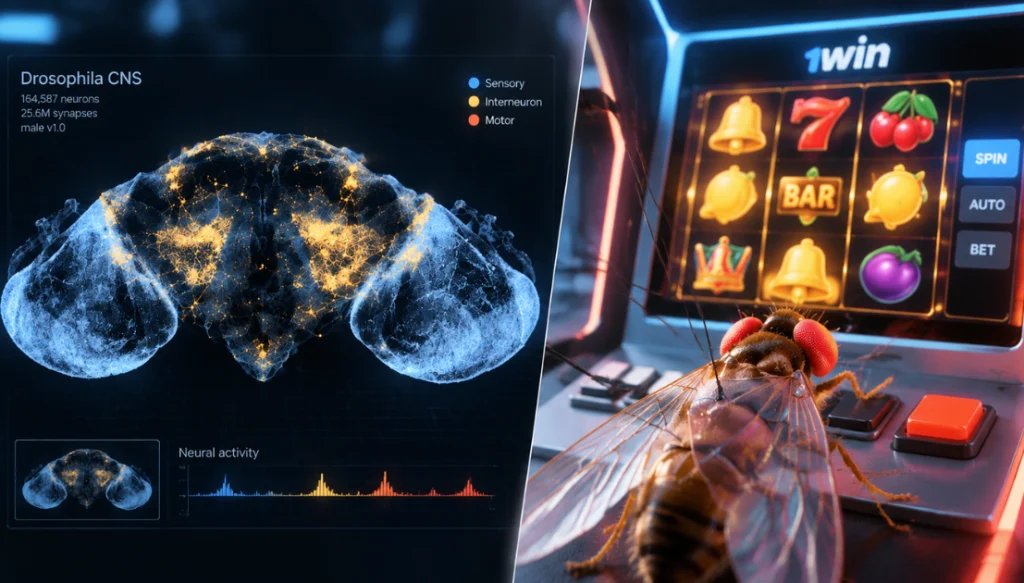
However, the real value of these experiments turned out to be not in games or crypto, but in science. The fly’s connectome — a detailed map of connections between its neurons — has become an important tool for studying how the nervous system works and has helped scientists better understand the structure of the brain. In the future, such research could help create connectomes of more complex organisms and even contribute to the study of the mechanisms behind human diseases.
*The fly model used in The Fly’s Table blackjack project is based on an older digital fly brain model rather than the newer MaleCNS v1.0 reconstruction.


Best Bonuses

Binance Referral ID — Inviter Code
Active Until: 22.12.2029
Along with up to $100 in welcome rewards, you receive a 5% fee rebate on Spot trading and a 5% fee rebate on Futures trading.

Win Win Promo Code – Valid Bonus Code Today
Active Until: 22.12.2028
Get 100% first-deposit bonus for sports betting, followed by extra bonuses on the 2nd, 3rd and 4th deposits after the welcome bonus has been wagered.

BitStarz Bonus Code – Welcome Bonus
Active Until: 22.12.2026
BitStarz offers a welcome bonus: up to $500 or 5 BTC, plus extra rewards after your first deposit.

Best Linebet Promo Code for New Users: 2 Welcome Bonuses
Active Until: 22.12.2026
Up to 1766 USD + 150 free spins for casino or a 100% sports bonus up to 117.89 USD on the first deposit.

Working 888starz.bet Promo Code – Sports & Casino Bonus
Active Until: 22.12.2027
Promo code unlocks the full welcome package, including up to €1500 + 150 Free Spins in the casino and up to €400 in sport.

Working Pinco Promo Code 2026 – Elite Welcome Rewards
Active Until: 22.12.2026
New players at Pinco can claim a 160% casino bonus on their first deposit by registering with the promo code GPARK.